Long-distance caregiving works best when it fills a defined gap rather than trying to supervise everything remotely. You might arrange repairs, research services or handle an agreed administrative task. Start by asking the person receiving support and anyone helping locally what would be useful. A dependable contribution with clear limits is more valuable than a collection of apps nobody has agreed to use.
Choose a responsibility you can complete from afar
The National Institute on Aging describes several long-distance caregiving roles. Match a role to your availability and the person’s preferences. For example, gathering three service quotes is a clear assignment; “keep an eye on everything” leaves both the work and responsibility uncertain.
Agree what decisions you can make, what needs separate approval and how you will report progress. Do not assume family membership gives access to medical records, financial accounts or a home. Obtain appropriate consent or authority for the specific task and ask relevant professionals when requirements are unclear.
Make check-ins useful without making them intrusive
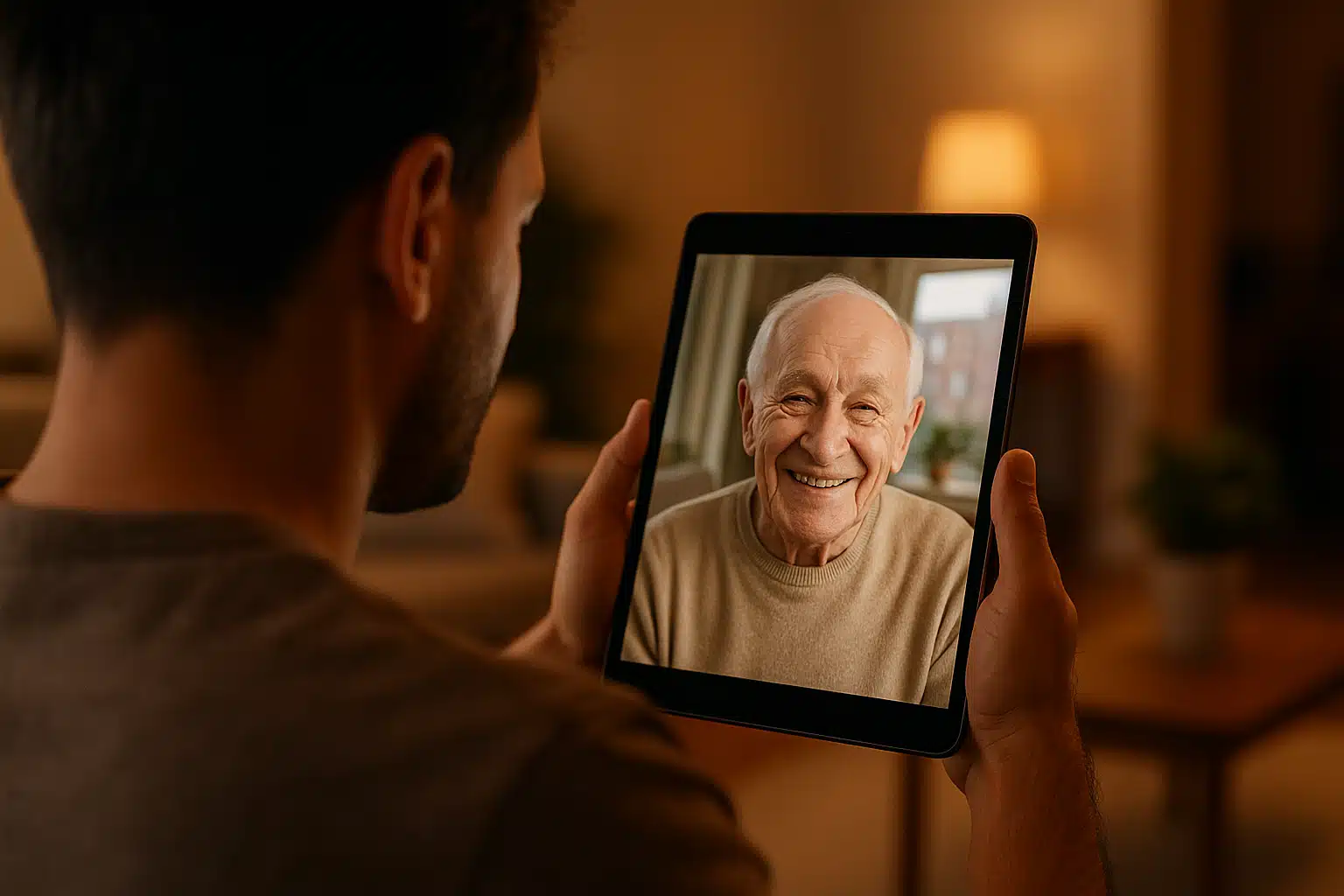
Agree on a communication method and schedule that both people can manage. A phone call may be preferable to video or a new device. Keep room for ordinary conversation rather than turning each contact into an inspection. Ask about a specific unresolved task when needed, such as whether the repair visit happened.
A missed call has several possible explanations. Decide in advance what follow-up the person wants: another call, a message or contact with an agreed local helper. Establish what to do if there is a genuine urgent concern. A relative far away should not assume a routine check-in substitutes for available local assistance.
Build a local plan with explicit agreement
Ask trusted local contacts what they are willing and able to do. Someone who can check a delivery may not be able to provide personal care or transport. Record responsibilities and alternatives when that person is unavailable. Share only the information needed for the task, rather than circulating medical details and access instructions to everyone.
Keep emergency contacts and necessary care information in a protected location accessible to authorized people. Store door codes, spare-key details and account credentials separately from an ordinary family task list. Review access when helpers change. Our remote access guide covers related privacy and account questions.
Use technology for a specific purpose
A video doorbell might help manage visitors, but it does not show whether someone has eaten or can get out of bed. An alert device’s response and family-notification arrangements depend on its service. Ask who responds, how contact works and what happens if connectivity fails before relying on either device.
Discuss recording, access and the resident’s preferences before installation. Read our doorbell guide, voice assistant guide or medical alert guide only when it fits the identified need. More devices do not automatically mean better support.
Give each visit a manageable purpose
- Agree on one or two practical tasks before traveling.
- Confirm appointments rather than assuming providers are available.
- Ask the local helper which unfinished task needs attention.
- Leave time for companionship and the person’s own priorities.
- Record completed work and any follow-up responsibility.
Use the home checklist for a focused discussion, without asking someone to demonstrate unsafe movements. If a clinical assessment is needed, arrange it with an appropriate professional rather than treating your visit as an examination.
Review whether the arrangement is sustainable
Ask the person and local helper whether your contribution is reducing work or creating more messages to answer. Adjust the schedule when circumstances change. Our family responsibility guide helps assign follow-up and backup. The plan should say what happens when you cannot travel or respond, rather than depending on constant availability.
Leave a Reply