A medical alert system means help is reachable at the push of a button, even if a phone isn’t nearby. Here’s how to think through the options.

Subscription vs. No-Monthly-Fee Systems
Traditional medical alert brands (like Medical Guardian or Life Alert) connect through a 24/7 monitoring center for a monthly fee, typically $20–$50/month, and route your call to a live operator who can dispatch help. No-fee alternatives connect a wearable button directly to a receiver in the home, or dial 911 or family members directly — a one-time purchase with no ongoing cost, but generally a shorter range and no live monitoring center.
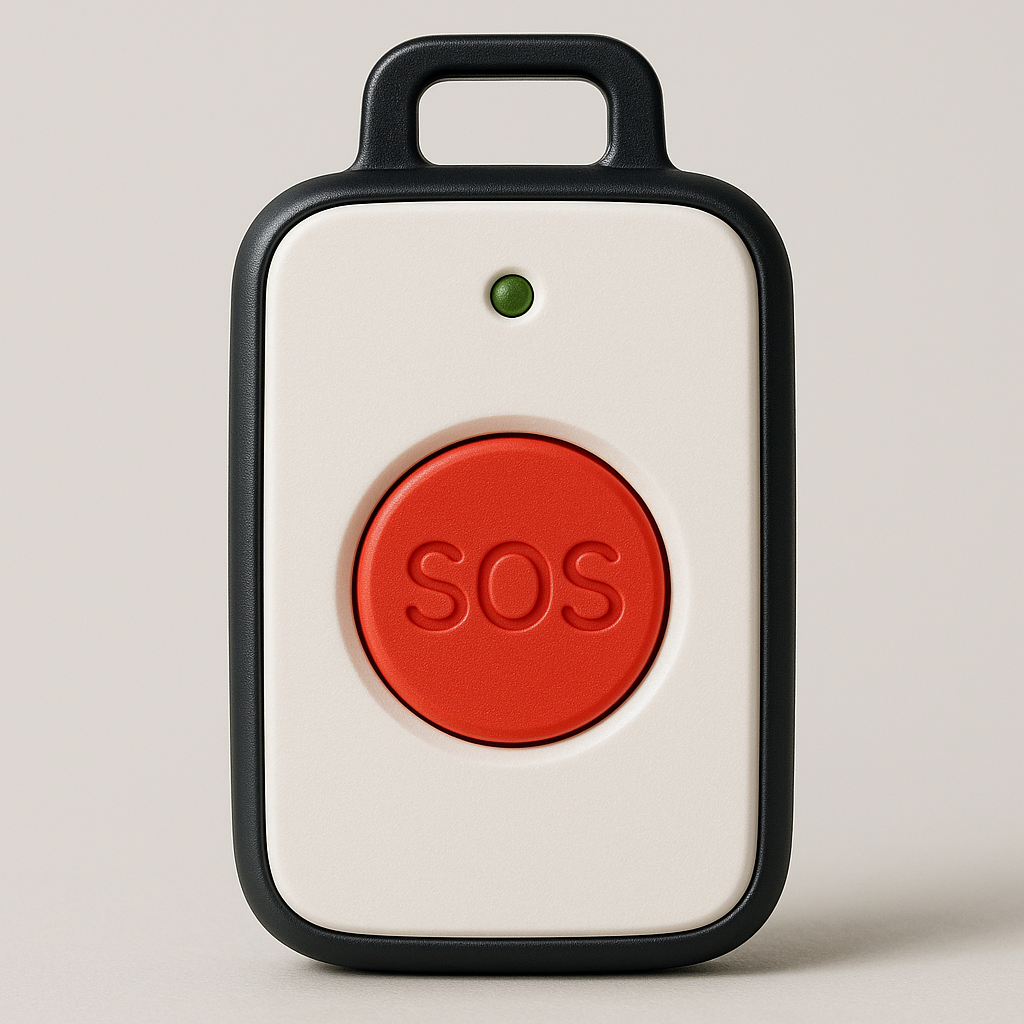
Wireless Caregiver Pager with SOS Button — 500+ ft range, no monthly fee, loud adjustable alert, waterproof button.
As an Amazon Associate, Aging Safely Home earns from qualifying purchases.
In-Home vs. Mobile (Cellular) Systems
In-home systems work within a set range of a base station — fine for someone who stays mostly at home. Cellular/mobile systems work anywhere there’s cell coverage, useful for someone who’s active outside the home, but usually cost more and often require a subscription.
Fall Detection
Some systems include automatic fall detection, which can call for help even if the wearer can’t press the button. This is a genuinely useful feature for anyone with a history of falls, though it adds to the monthly cost and isn’t 100% reliable at detecting every kind of fall.
Key Questions Before Choosing
- Does it need to work outside the home, or just inside?
- Is a monthly fee acceptable, or is a one-time purchase preferred?
- Would a caregiver benefit from fall detection specifically?
- Is the button comfortable enough to actually wear consistently?
Next Steps
Whatever system you choose, the most important factor is that it actually gets worn every day — the best system is the one that’s on when it’s needed.
Deja una respuesta