Choose DIY work by the consequences of a mistake, the resident’s needs and the instructions for the specific product. A small project can still be safety-critical. This guide is a planning aid, not permission to carry out licensed or structural work.
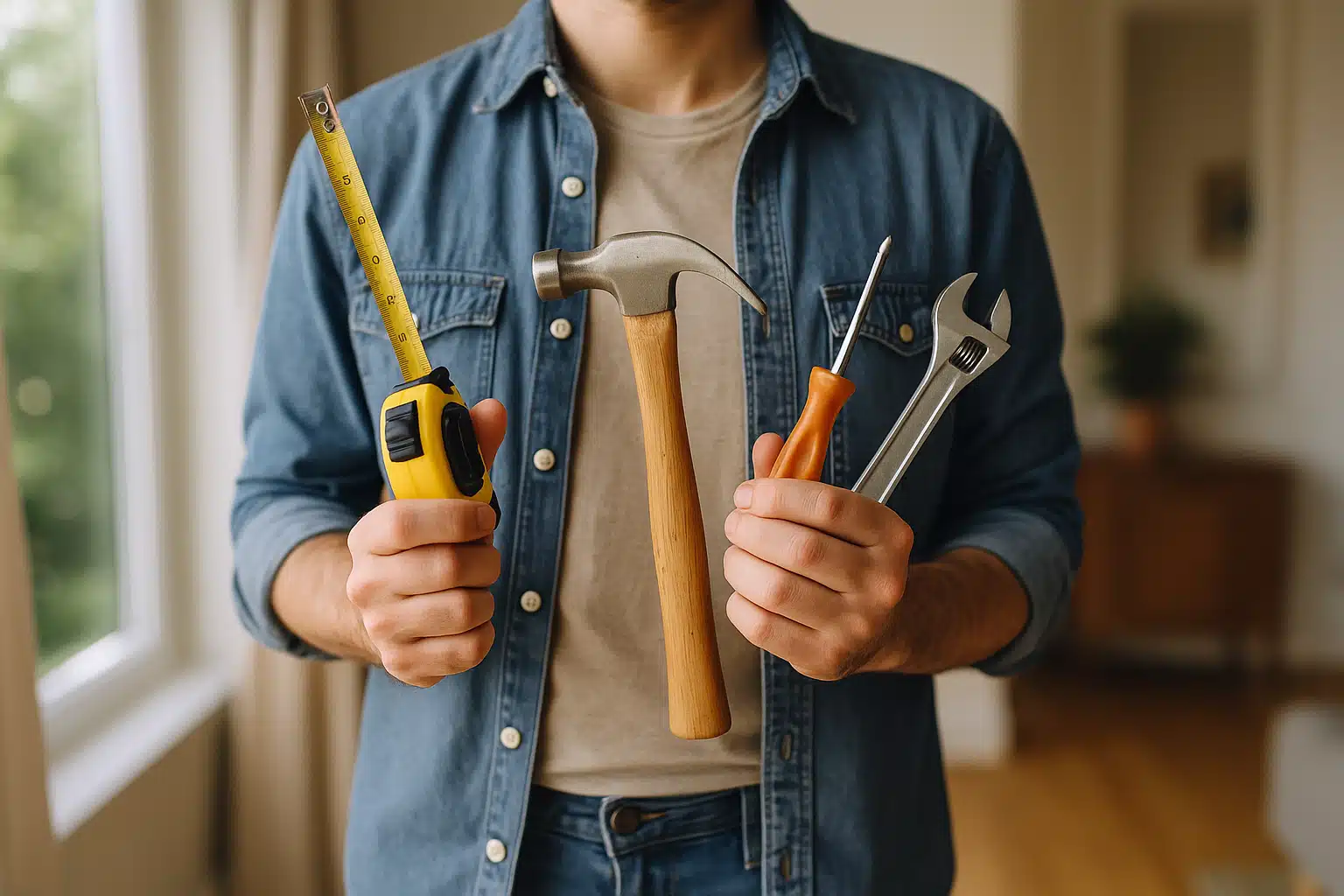
Start with changes that do not alter the building
The CDC’s older-adult safety resources include removing home hazards and discussing falls prevention with a health care provider. Begin with observations and simple arrangements rather than installing support equipment by guesswork.
| Task | Possible first step | When to get help |
|---|---|---|
| Cluttered route | Agree where loose items and cords can be moved. | Moving heavy furniture or changing a route used with equipment. |
| Items out of reach | Move frequently used light items to an accessible location. | A change that affects safe transfers, balance or storage stability. |
| Poorly lit route | Consider a suitable plug-in light following its instructions. | New wiring, damaged outlets or persistent visibility problems. |
| Bathroom support | Record the task and existing layout. | Support bars, transfer equipment and uncertain wall construction. |
| Step or threshold | Record the obstruction for assessment. | Ramp selection, secure placement, structural changes or uncertain clearance. |
A portable product is not automatically a simple DIY fix
A ramp being portable does not tell you whether it fits the rise, available landing space, mobility aid, load or surface. Check the specific manual and have the intended use assessed where necessary. Do not test an unsuitable arrangement by attempting a difficult ascent. See our ramp planning guide before choosing equipment.
Likewise, do not substitute a suction accessory or towel rail for a required support bar. Confirm the purpose and limitations of the product; placement and anchoring need to suit the wall and intended loading. The grab bar guide explains what to discuss with an assessor and installer.
Separate personal fit from installation
The AOTA home modification resource describes occupational therapy’s contribution to the team. A useful arrangement may require both assessment of the activity and competent construction. One does not replace the other.
The Access Board’s bathing-room guidance shows how seats, controls, clear space and support relate to one another. These standards are not a universal instruction sheet for every private bathroom. Discuss applicable local requirements and the resident’s actual task before changing the layout.
When professional installation is the better next step
- The work alters wiring, plumbing, waterproofing, structure or a required escape route.
- The product is intended to support a person and you cannot establish suitable attachment or fit.
- A permit, trade license, inspection or manufacturer-approved installer may be required.
- You cannot complete the work without unsafe lifting, climbing or leaving the home unusable.
Ask your local building department which permissions and qualifications apply. A person describing themselves as a handyman is not, by that description alone, qualified for every task. Request relevant credentials and a written explanation of the work instead of assuming a lower price assures an appropriate installation.
Agree how to check the finished work
Before hiring, ask what documentation, instructions and handover will be provided. Keep the specific product manual and warranty, agree who maintains the equipment, and arrange follow-up if the resident’s needs change. Do not stress-test an installed support with a person when you doubt the installation.
Continue with questions to ask the contractor and arranging an assessment. The useful next step is resolving the uncertainty, not buying another device.
A small-project example
A family wants better nighttime lighting. Moving a suitable plug-in light may be a simple first step if it follows the instructions and its cord stays out of the route. Adding a new outlet is a different job. If the person still has difficulty seeing or navigating the path, buying more lights does not resolve the personal-use question; ask for an assessment. Keep the observation, installation and follow-up decisions separate.
Leave a Reply