A ramp that’s too steep can be harder — and more dangerous — to use than the steps it replaces. Here’s what governs safe ramp slope for home use.
The Standard Slope Ratio
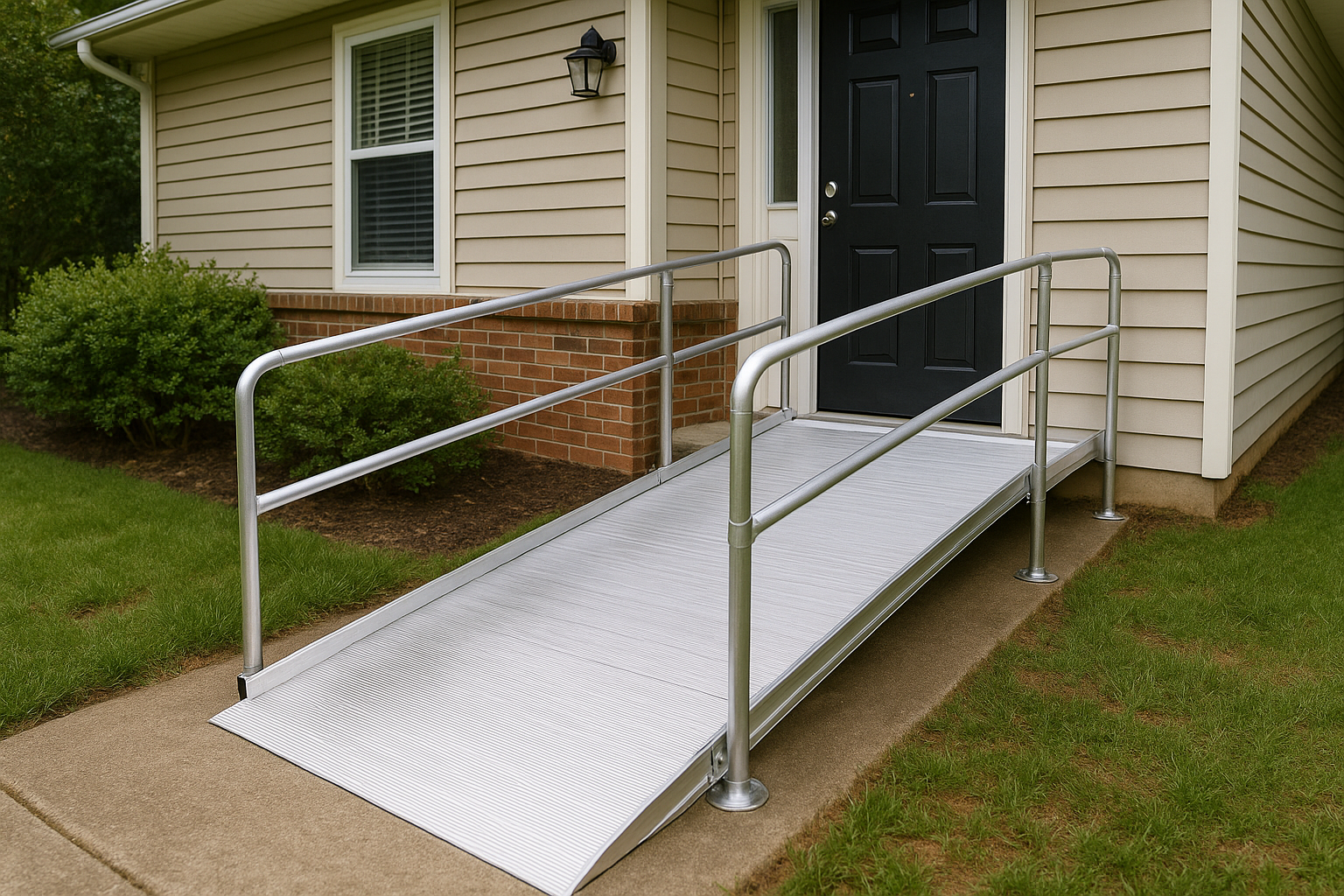
The ADA guideline for wheelchair-accessible ramps is a 1:12 slope — meaning 1 inch of rise for every 12 inches of ramp length. For a step that’s 6 inches high, that means a ramp roughly 6 feet long.
Why the Ratio Matters
A steeper ramp is harder to push a wheelchair up, and riskier to control coming down — especially for someone self-propelling or using a manual wheelchair without help. Sticking close to the 1:12 standard keeps the ramp usable and safer.
Width and Surface
- Minimum clear width of 36 inches is standard for a single-user ramp.
- A non-slip surface is essential, especially for outdoor ramps exposed to rain or snow.
- Edge protection (a raised lip on either side) helps prevent wheels from rolling off the edge.
Landings
A flat landing at the top and bottom of the ramp — and at any turn — gives space to safely stop, rest, or maneuver a wheelchair before continuing.
Permanent vs. Portable
For a single step or low threshold, a portable ramp may be enough — see our portable vs. permanent ramp comparison. For multiple steps or a permanent solution, a built ramp following the 1:12 slope standard is the safer long-term choice.
Next Steps
For a permanent ramp, consult a contractor familiar with ADA specifications to make sure the finished ramp is safe and code-compliant for your area.
Deja una respuesta