A useful home safety assessment starts with a daily task that has become difficult, not a shopping list of equipment. Decide what you want help with, arrange the right kind of visit, and ask for a written plan you can act on. A free online checklist can organize observations; it cannot evaluate how an individual transfers, balances or uses a mobility aid.
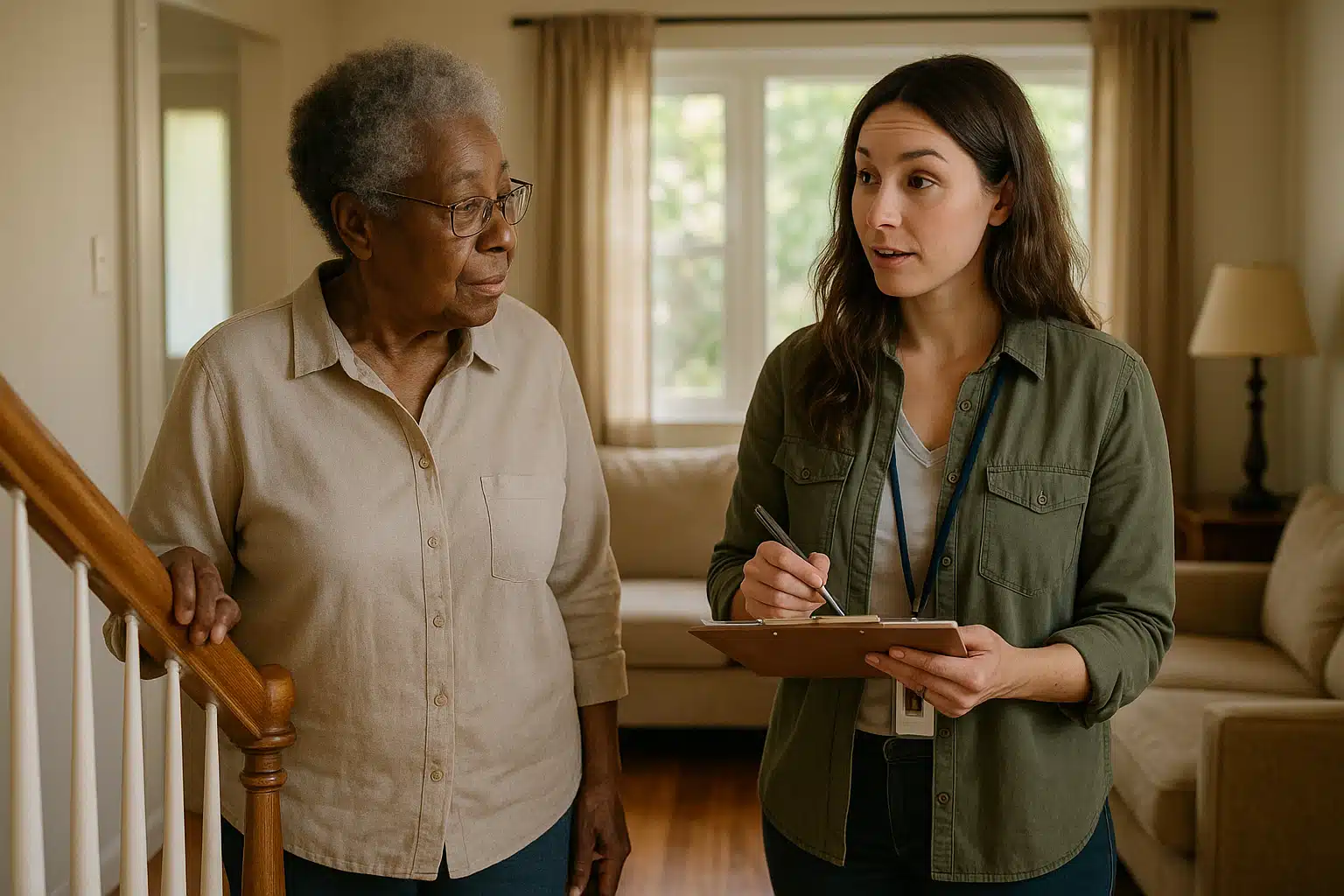
Choose the right type of help
| Your question | Who to ask | What to request |
|---|---|---|
| How can I manage bathing, dressing or moving through the home? | An occupational therapist with home modification experience | An individual evaluation of tasks, equipment and the home environment. |
| What building work is needed to implement an agreed plan? | An appropriately qualified contractor or designer | A site visit, specifications and a written scope of work. |
| Where can I find local services or assistance? | Your Area Agency on Aging | Local service contacts, eligibility details and application requirements. |
The American Occupational Therapy Association describes occupational therapy’s role in home modification teams. Clinical evaluation and construction planning answer different questions; ask each provider what their visit includes.
Before booking: five things to confirm
- Ask who will carry out the visit and how to verify their relevant professional license or qualifications.
- Describe the specific tasks you want reviewed. Ask whether the service covers those tasks rather than only a visual walkthrough.
- Request the fee, travel charges, report cost and follow-up terms in writing.
- Ask the provider and your insurer separately about referral requirements, authorization and your out-of-pocket cost. Do not assume that a service called a home assessment is covered.
- Confirm whether the visit is in person or remote, who should attend, and how photos or other private information will be handled.
Prepare a useful brief
With the resident’s permission, choose up to three everyday problems and write down when each occurs. For example: “The route from the bed to the bathroom is difficult at night” is more useful than “We need more safety products.” Note whether the difficulty is reaching a control, opening a door, seeing the route or having space for equipment. Do not deliberately repeat a risky activity to demonstrate it.
Ask how to prepare before the appointment. Have relevant equipment instructions available, but share health information directly with the clinician through their usual secure process. If you rent, identify who must authorize alterations. A family member can take notes if the resident wants them present.
A sample brief for the first assessment call
Illustrative brief, shared with the resident’s permission: “We would like help reviewing the bedroom-to-bathroom route at night, reaching shower controls while seated, and space for a mobility aid near the toilet. We want an individual task review before choosing fixtures. We will not repeat a difficult transfer for a household demonstration.”
| What to include | Example detail |
|---|---|
| Task and setting | Night route from bed to bathroom; light control is at the far side of the room. |
| Existing arrangement | Resident uses their usual mobility aid; ask the provider what measurements or equipment information to prepare. |
| Permission and access | Resident wants a family helper present. Any proposed building alteration needs the owner’s permission. |
| Requested output | Written priorities, equipment or installation requirements, and a clear explanation of follow-up. |
Then ask: “Does your assessment cover these tasks? Who conducts it, what qualifications can we verify, and what is the full visit-and-report fee?” Share health details through the provider’s normal secure process if they need them. The tool below turns selected concerns into first-call questions; it does not send the brief, book an appointment or decide which equipment the person needs.
Make your assessment call checklist
Select the topics you want to discuss. This short planning tool creates questions for your first call; it does not assess risk, recommend equipment or book a service.
Your selections stay in this page and clear when you leave or reload. No email or personal details are required. This tool prepares a conversation; it does not evaluate safety or determine insurance coverage.
What to ask for after the visit
- A written description of the tasks reviewed and the proposed changes.
- Which changes need a contractor, a product fitting or further clinical review.
- An order for implementation, including what to do while waiting for work.
- How the resident will learn to use any new equipment and when to review the plan.
Illustrative example: an assessment identifies a difficult shower transfer. Before buying a chair, ask for the intended transfer method and equipment requirements; then ask the installer how the layout and support will be provided. Separate the agreed outcome from a particular product or contractor’s sales proposal.
The USC home modification toolkit distinguishes tools designed for professionals from checklists for residents and caregivers. Choose resources for their intended user rather than interpreting a consumer checklist as a clinical result.
Turn recommendations into tasks
Use our home review and action plan to record practical follow-up tasks. For construction work, continue with finding a CAPS professional and questions for a contractor. Review the plan when routines, equipment or support arrangements change.
Leave a Reply