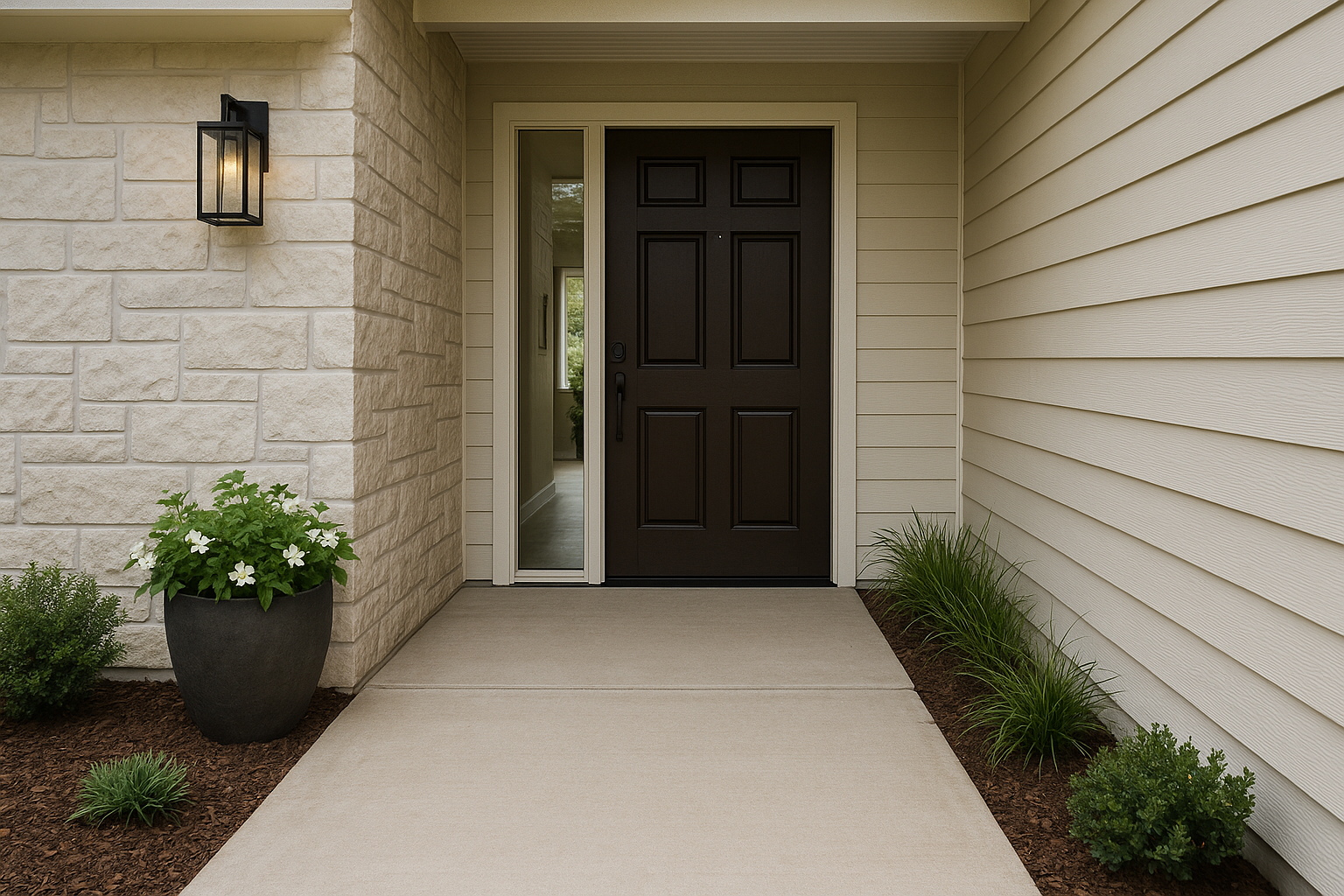
A zero-step entry removes the need to climb any steps to get into the home — useful for wheelchair users, walker users, and simply for reducing fall risk at the most-used entrance.
What It Involves
Depending on how many steps currently exist and the home’s grading, a zero-step entry project can mean regrading the surrounding land, building a gentle ramp, or, for homes with only one or two steps, a smaller-scale threshold modification.
Typical Cost Range
Costs vary enormously based on the number of steps, the home’s existing grading, and whether drainage or structural work is needed. Small threshold-level projects can run a few hundred dollars, while regrading a yard and building a permanent ramp system can run several thousand. Get a site-specific quote from a contractor rather than relying on a general estimate for this type of project.
Simpler Alternatives
If a full regrade isn’t practical, a well-built ramp following the 1:12 slope standard (see our ramp slope guide) can achieve a similar result at lower cost for a single step or low threshold.
Drainage Matters
Any zero-step entry needs to manage water runoff away from the home’s foundation — this is a detail worth discussing carefully with your contractor, since getting it wrong can cause water intrusion problems.
Next Steps
Consult with a CAPS-certified contractor who can assess your specific entrance and grading before committing to an approach.
Deja una respuesta