A handrail only helps if it’s at a height and position that’s actually comfortable and secure to grip through the full length of the stairs.
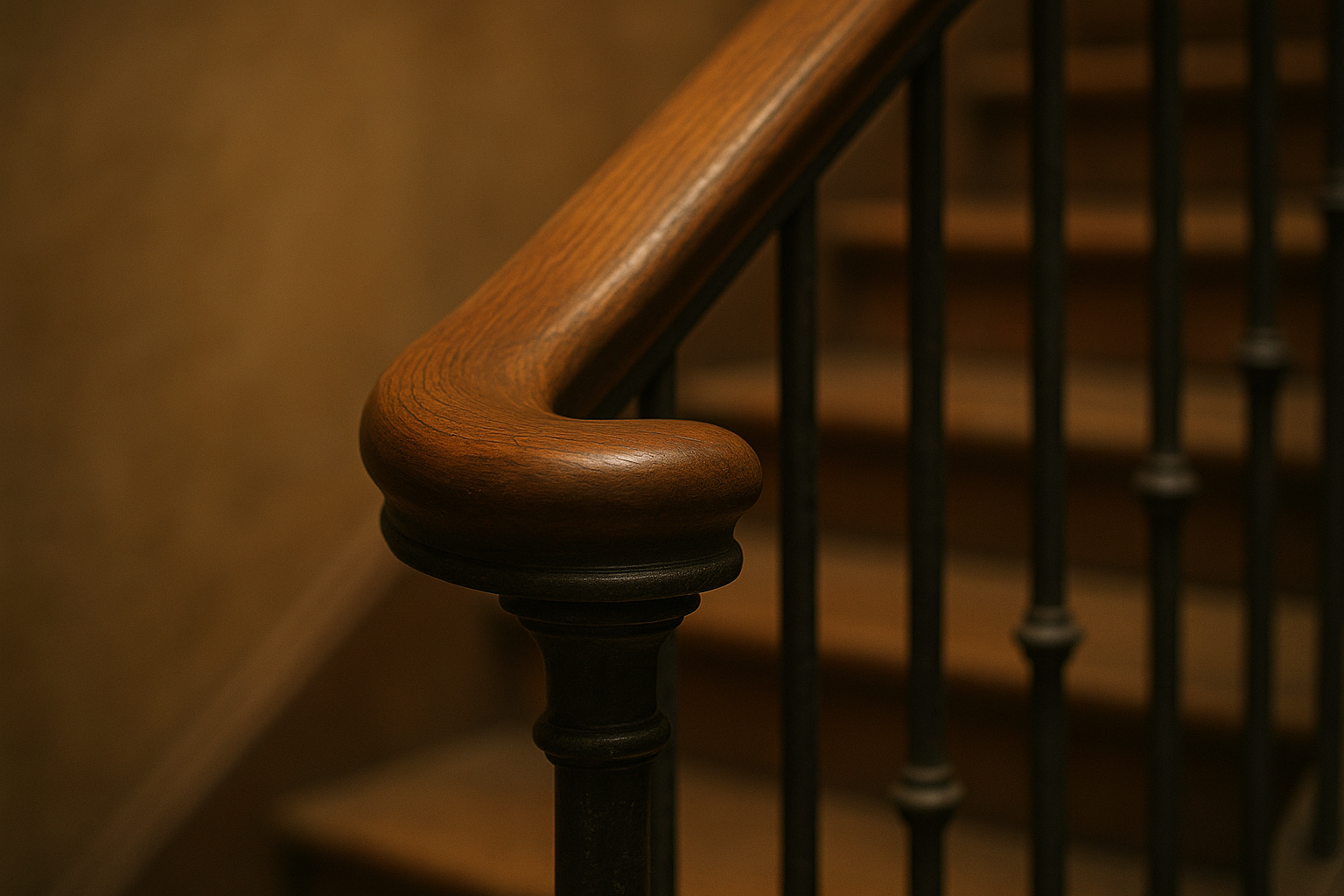
Standard Height
Most residential building codes specify a handrail height between 34 and 38 inches, measured vertically from the front edge (nosing) of each stair tread. If a handrail feels too low or too high to grip comfortably, it’s worth checking against these numbers.
Graspability
A round profile between 1.25 and 2 inches in diameter is generally easiest to grip securely with a full hand wrap, compared to flat or overly wide rail profiles that are harder to hold onto firmly.
Continuous Coverage
A handrail should run the full length of the stairs without gaps, including extending slightly beyond the top and bottom steps, so there’s something to hold onto right up until both feet are on level ground.
One Side or Two?
A handrail on both sides is ideal, especially for anyone with balance concerns on one side. If only one is currently installed, adding a second is a relatively affordable upgrade compared to other stair modifications.
Checking Stability
A handrail that wobbles or flexes under real pressure needs to be re-secured or replaced — this is worth testing directly by applying firm pressure at several points along its length.
Next Steps
Pair a solid handrail with our other stair safety recommendations for the full picture.
Deja una respuesta