Stairs are one of the most common places for falls at home, but most of the risk can be reduced with a handful of targeted changes.
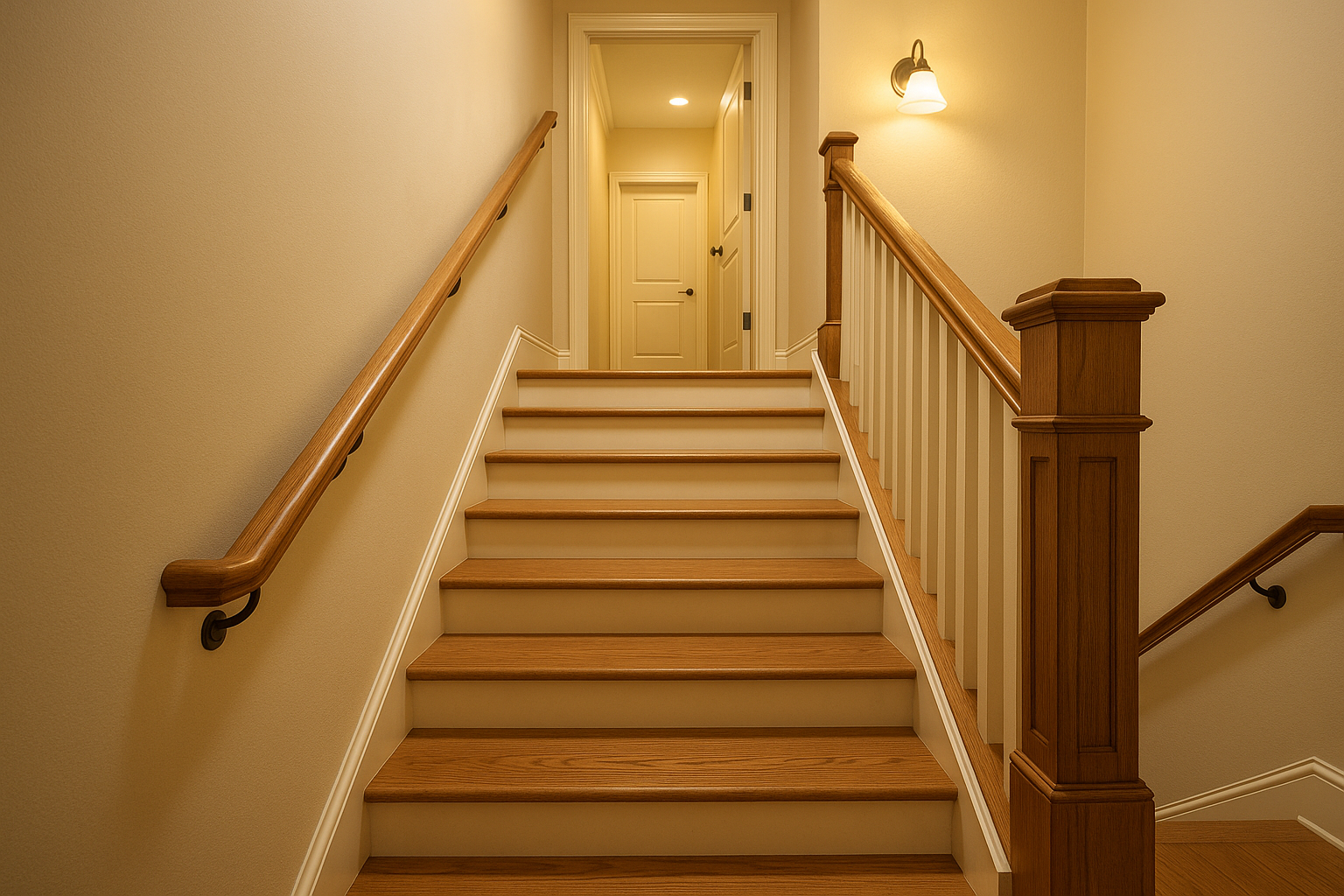
Check the Handrails First
Ideally, a staircase should have a sturdy, graspable handrail on both sides, running the full length of the stairs. If a second handrail isn’t practical, make sure at least one side has one that is solidly anchored — not just decorative.
Add Non-Slip Treads
Non-slip tread strips are an inexpensive way to add grip to smooth or worn stair surfaces, especially on wood or tile stairs.
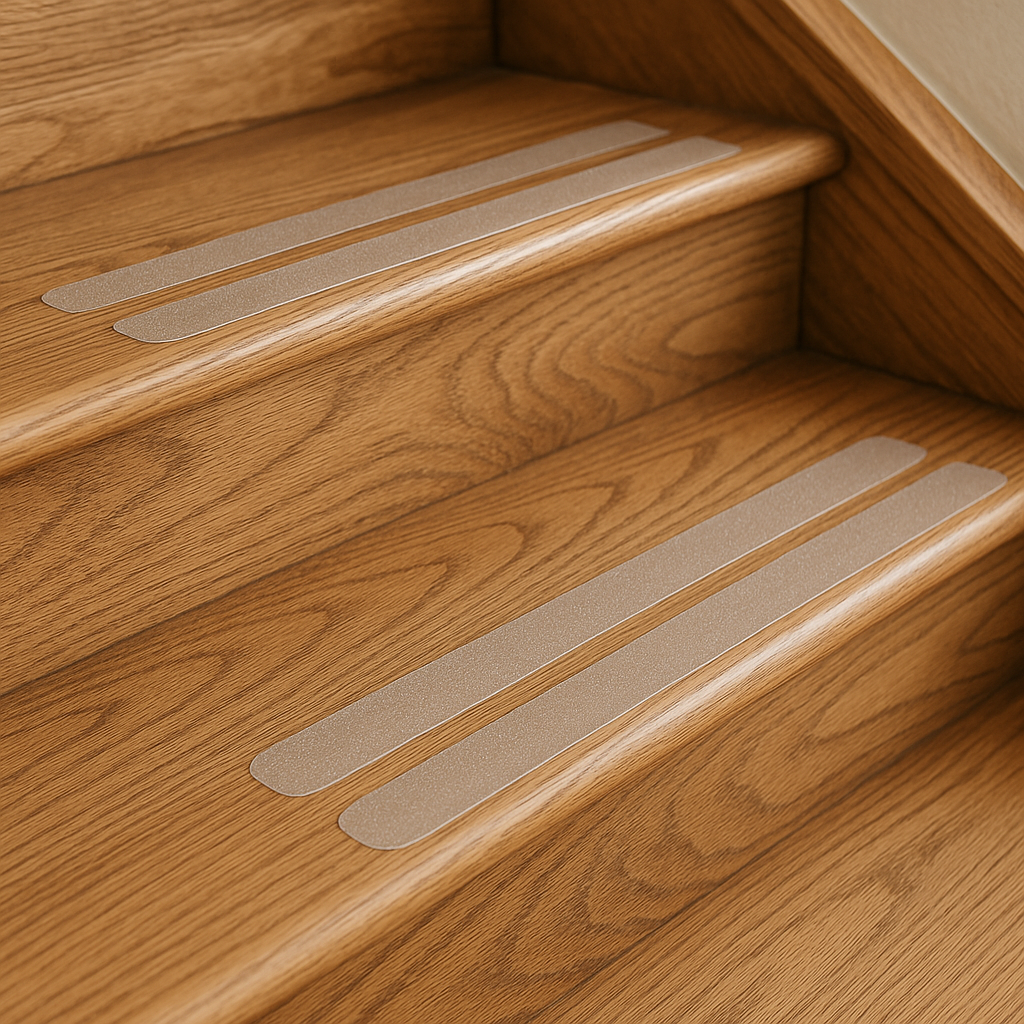
Clear Non-Slip Stair Tread Strips (15-Pack) — pre-cut, transparent so they don’t change the look of your stairs.
As an Amazon Associate, Aging Safely Home earns from qualifying purchases.
Light Both Ends of the Staircase
Make sure both the top and bottom of the stairs are well lit, ideally with a switch at each end — or a motion-sensor light, so there’s never a need to climb or descend in the dark. See our guide to the best lighting setup for seniors at home.
Clear the Stairs Completely
Stairs should never be used for temporary storage — no shoes, laundry baskets, or boxes «just for a minute.» A cluttered stair is one of the most preventable fall risks in the home.
When to Consider a Stair Lift
If stairs are becoming difficult regardless of these fixes, a stair lift may be worth exploring. We cover costs and options in our Stair Lift Cost Guide.
Deja una respuesta