A large share of falls at home happen during short nighttime trips — getting up for the bathroom, a glass of water, or to check a noise. The good news is that this specific risk responds very well to a few targeted changes.
Why Nighttime Is Higher Risk
At night, the body is less alert, eyes need time to adjust from darkness, and balance can be slightly less reliable right after waking. Combine that with a dark, unfamiliar path, and the risk of a misstep goes up substantially.
Light the Exact Path You’ll Walk
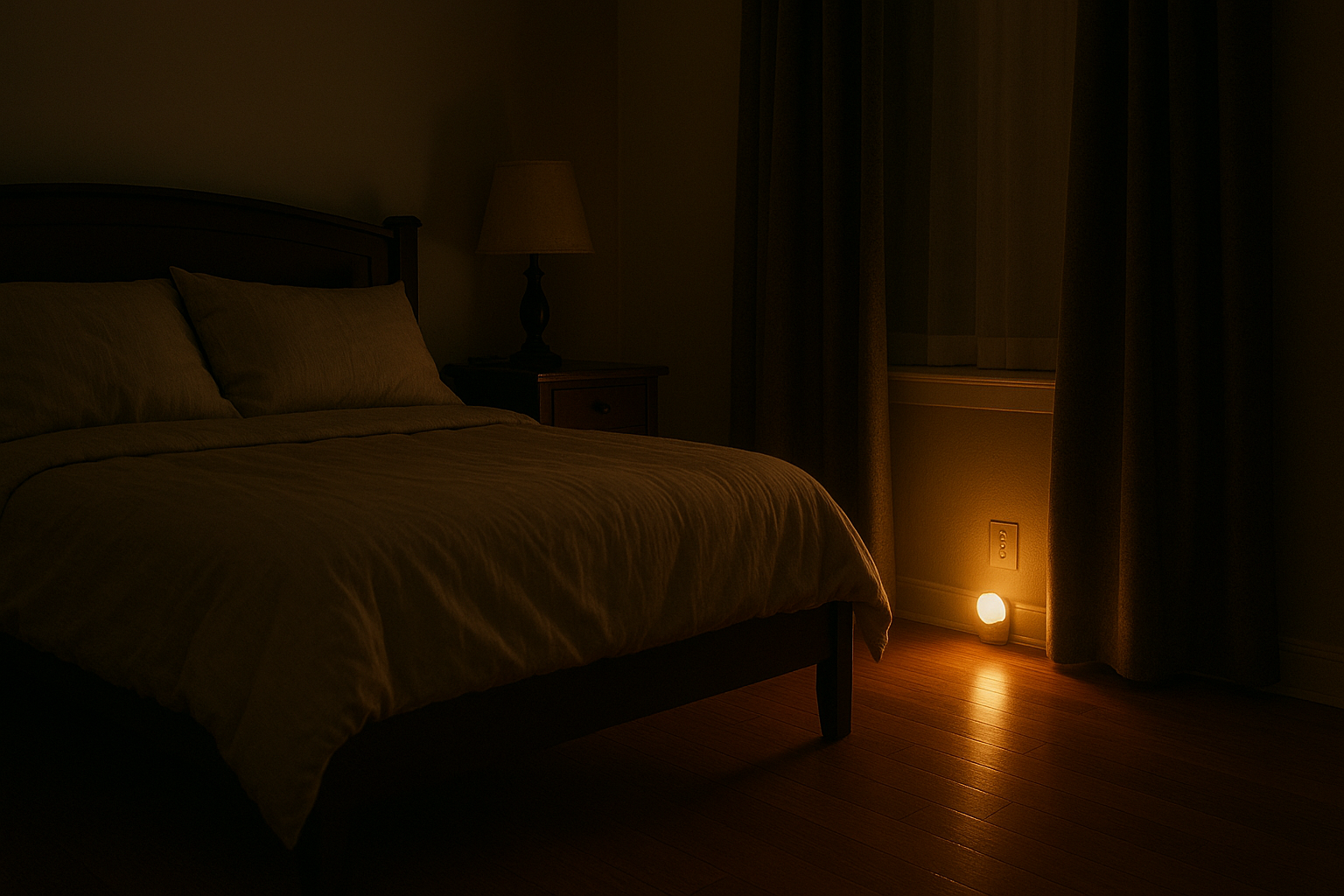
Rather than lighting an entire room, focus on the specific path from bed to bathroom. Plug-in or motion-sensor night lights placed low, near the floor, help without being bright enough to disrupt sleep. See our full lighting guide for specific placement advice.
Keep the Path Completely Clear
Walk the route yourself at night and remove anything in the way — shoes, cords, pet bowls, furniture that’s been moved. What looks fine during the day can become a tripping hazard when the room is dark.
Consider What’s Within Reach of the Bed
- A phone or medical alert device, so help is reachable without standing up first.
- A light switch or lamp within arm’s reach, not across the room.
- Glasses, if needed, placed somewhere consistent and easy to find in the dark.
A Note on Getting Up Slowly
Sitting on the edge of the bed for a moment before standing gives the body a chance to adjust and can reduce dizziness. This is worth mentioning to a doctor if dizziness on standing is a regular occurrence — it can have a variety of causes worth checking with a professional.
Next Steps
This is one piece of a bigger picture — see our full Home Safety Checklist for the complete room-by-room approach.
Deja una respuesta