A bed rail can provide helpful support for getting in and out of bed — but it’s worth understanding the different types and a few important safety points before choosing one.
What Bed Rails Help With
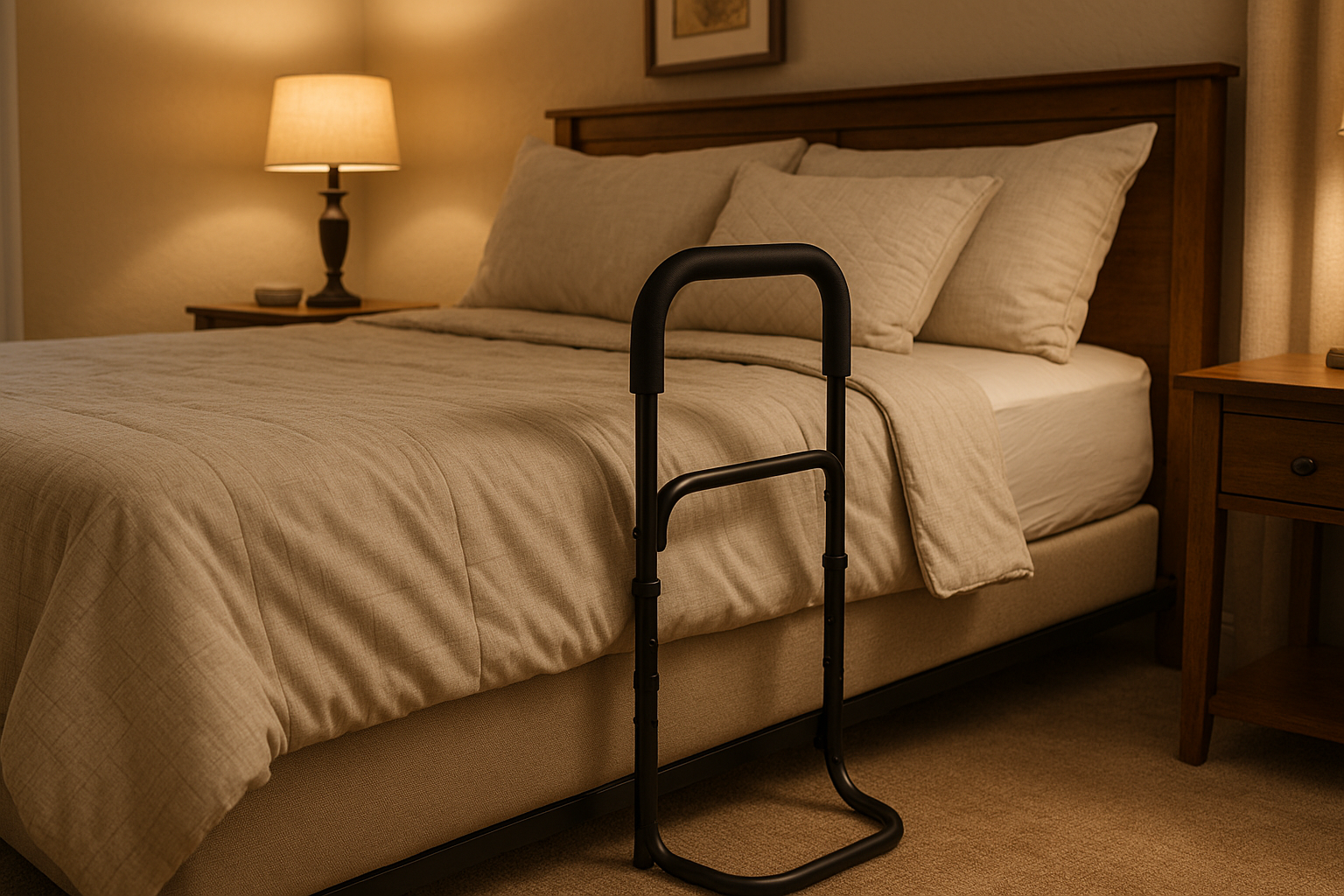
A bed assist rail gives something sturdy to push or pull against when sitting up, lying down, or transitioning to standing — useful for anyone with reduced strength, balance concerns, or recovering from surgery.
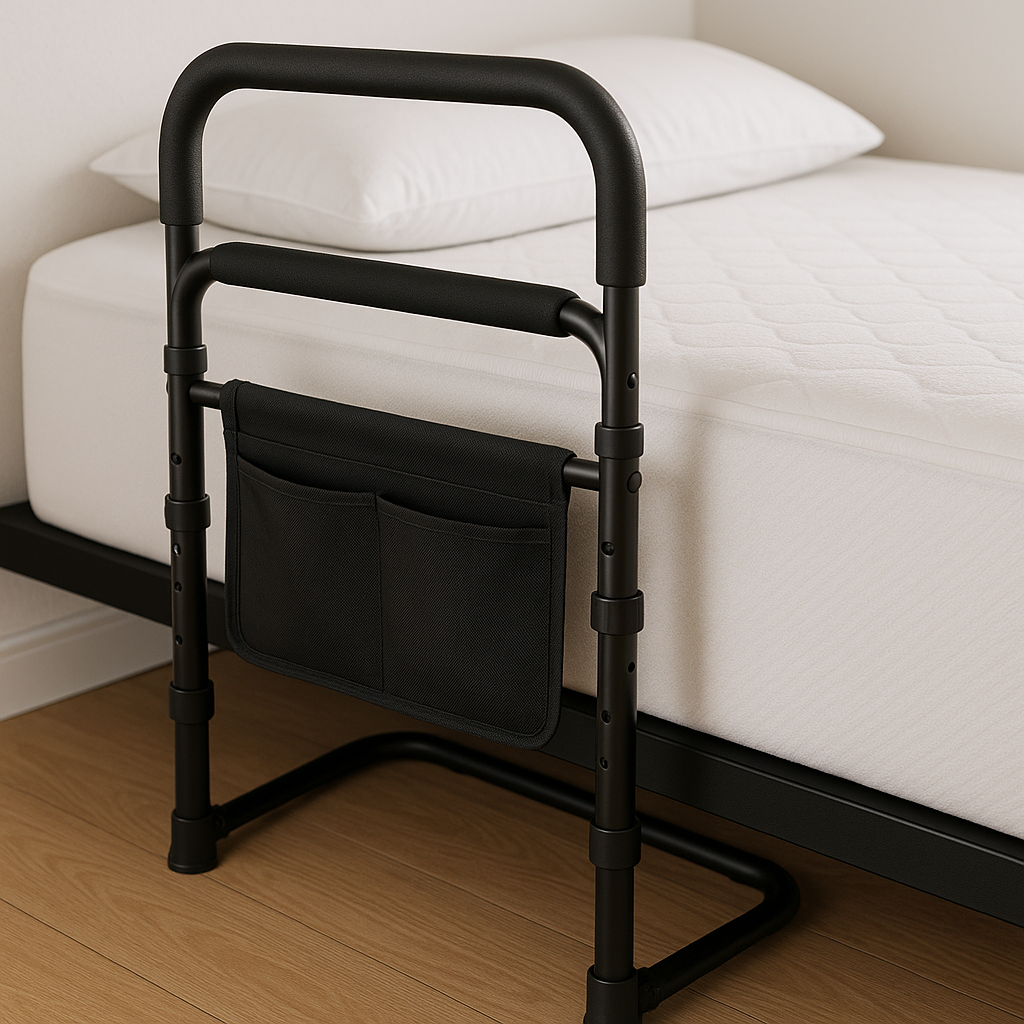
Adjustable Bed Assist Rail with Storage Pocket — ASTM-tested, tool-free setup, holds up to 380 lbs, fits Twin through King beds.
As an Amazon Associate, Aging Safely Home earns from qualifying purchases.
Types of Bed Rails
- Freestanding assist rails: a bar with legs that wedge under the mattress, no tools needed — the most common option for home use.
- Bed cane / bed pole: a vertical pole mounted between the mattress and box spring, positioned at the side of the bed for a single strong grip point.
- Full-length safety rails: run along most of the bed’s length, often used for individuals at higher fall risk from rolling out of bed.
An Important Safety Note
The FDA has issued safety communications about entrapment risk with certain bed rail designs, particularly gaps between the rail and mattress that a person could become caught in. Choose a rail sized correctly for the specific mattress and bed frame, follow the manufacturer’s installation instructions exactly, and check periodically that it remains securely attached. If there’s any uncertainty about fit or safety for a specific situation, it’s worth discussing with a doctor or occupational therapist before use.
Next Steps
Return to the full Bedroom Safety Checklist for the rest of the room.
Deja una respuesta